In a statement issued by A.S. Shankarapandian, General Secretary of Samuga Pothunala Iyakkam (TNSPI), he stated as follows:
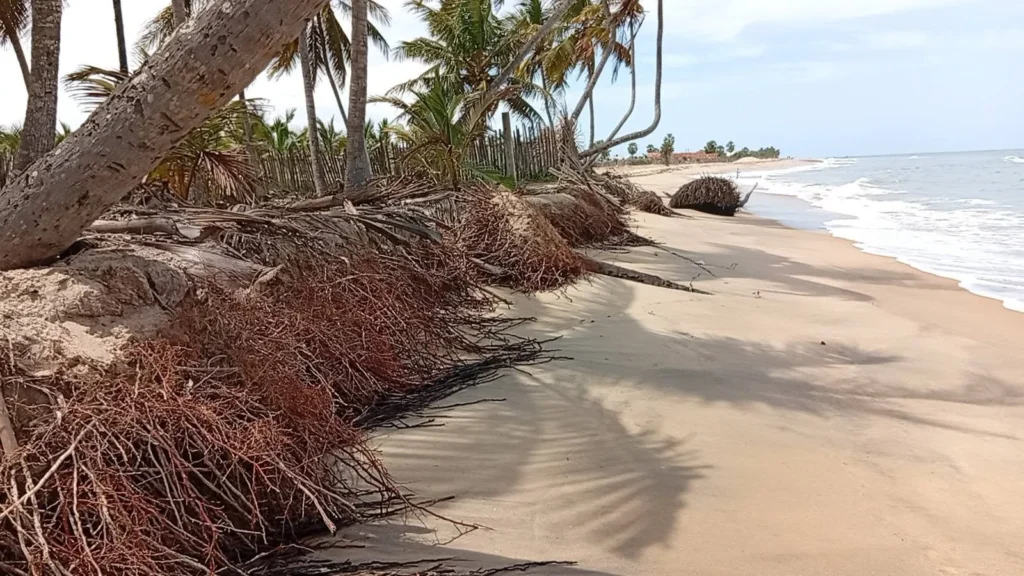
Kanyakumari district, at the southern tip of India, is where the Arabian Sea, Bay of Bengal and Indian Ocean meet. Along its 71.5-km coastline are 47 fishing villages from Arokiapuram to Neerodi. Tourism and fishing depend on the sea. Coastal stretches including the roughly 4-km-long Sothavilai beach, places of worship, multicoloured sands, fishing harbours and mangrove forests are among the district’s many distinctive marine features that attract visitors. In this situation, the coastline is being swallowed by the sea at 2.96 metres a year.
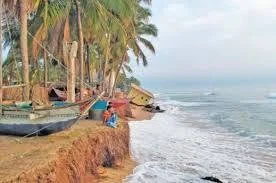
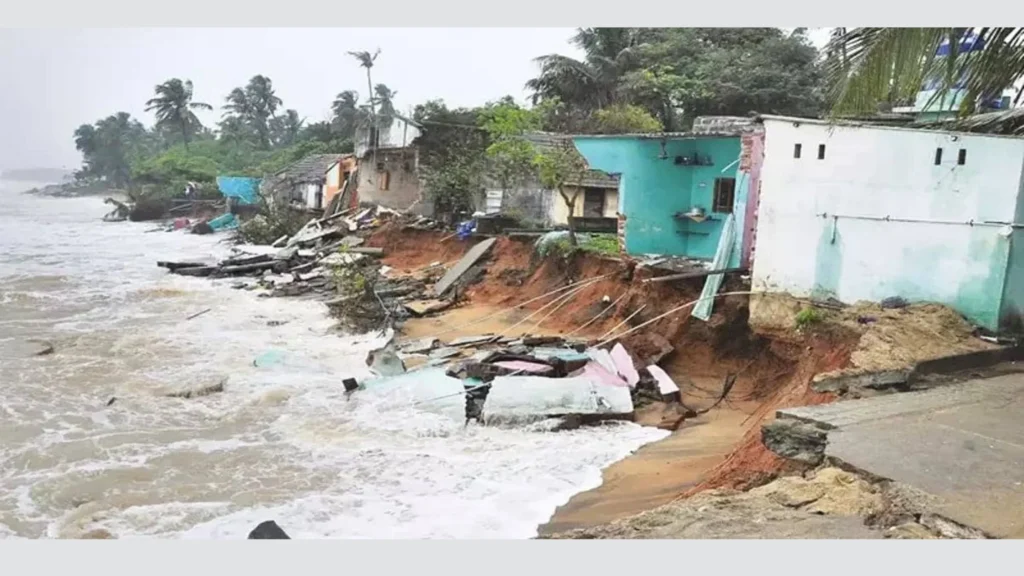
The western parts of the district including Thengapattanam, Keezhamanakudy, Pallam, Rajakkamangalam, Inayam and Neerodithurai continue to be affected by coastal erosion. It has been stated that 37% of the area is at high risk. Continuous coastal erosion from 2007 to 2024 has resulted in the loss of houses, land and boats, while roads have collapsed and transport has been cut off. The lives and livelihoods of people dependent on these areas are therefore being severely affected. In 2016, the sea engulfed more than 150 houses in the Mullurthurai area. Such recurring events remain a threat to the lives of people in this region.
It is said that these impacts are intensifying due to sea-level rise caused by climate change, rough seas, the impact of constructions including harbours, destruction of natural sand dunes, obstruction of sand carried through rivers and changes in wave direction due to the rocky peninsula. The Kanyakumari coast has naturally accumulated rare beach-sand minerals known as placer deposits, including monazite, ilmenite, rutile and zircon. The IREL plant established at Manavalakurichi in 1963 extracted sand over an area of 178.06 hectares, weakening natural protection, altering the natural structure of the coast and causing various consequences.
Weakening natural protective layers increases the impact of waves and results in large areas of land being lost to the sea. Nevertheless, attempts are being made to establish an atomic mineral mine over 1,144 hectares in a manner that would damage coastal structures, the environment and public health. People in the surrounding areas face the risk of further coastal erosion, seawater intrusion and impacts on agriculture and groundwater. Therefore, the project that would sacrifice the coast to the sea must be stopped, recommendations of bodies such as Integrated Coastal Management/NCCR should be implemented, and CRZ rules should be strictly enforced to protect the coast.
Under the TN SHORE MISSION (Tamil Nadu Strengthening Coastal Resilience and Economy) project, the government is attempting to implement coastal restoration and sustainable development works at a cost of Rs. 1,675 crore with World Bank financial assistance across Tamil Nadu’s 14 coastal districts. Following approval in September 2025, work is to focus particularly on seven districts: Chennai, Chengalpattu, Cuddalore, Thanjavur, Nagapattinam, Ramanathapuram and Thoothukudi. Considering the impacts in Kanyakumari district, it should also be included in this list so that this coastline, which stands as the identity of India’s southern tip, is protected.
Head Office,
Samuga Pothunala Iyakkam (TNSPI).