
In a statement issued by A.S. Shankarapandian, General Secretary of Samuga Pothunala Iyakkam (TNSPI), he stated as follows:
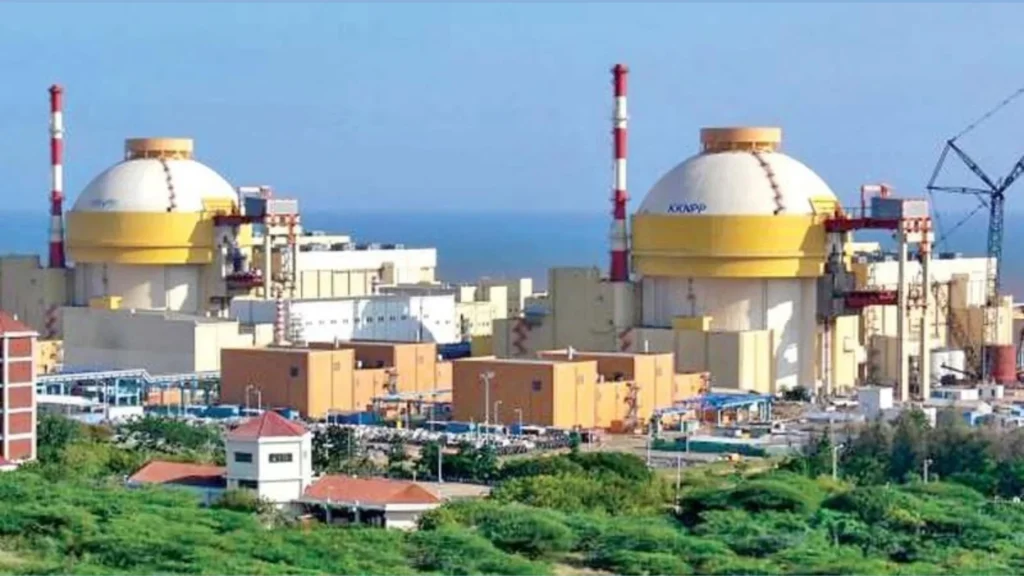
At present, two nuclear reactors are operating in the Kudankulam Nuclear Power Plant area. Construction work is also underway for four more reactors. It has also been announced that another two reactors will be constructed under the plan to transform the site into a nuclear power park. Nuclear waste generated from the two reactors currently in operation is being stored within the same complex in a temporary storage facility (Away From Reactor – AFR).
In the Kudankulam case in 2013, the Supreme Court, as one of 15 important conditions, directed that long-term waste management be implemented. Accordingly, in 2022, the Central Government sought additional time from the Supreme Court to establish a deep geological repository for the safe storage of nuclear waste. The Court directed that the specified permanent deep repository be established by July 2026. However, neither site selection nor construction work for this project has taken place so far. Nuclear waste continues to be stored only at the temporary storage facility in Kudankulam.
Former Tamil Nadu Assembly Speaker M. Appavu stated in December 2025 that storing nuclear waste within the plant complex was unsafe and that keeping such waste in this densely populated area posed a risk of long-term impacts on the people. However, the Central Government stated in Parliament last January that, because nuclear waste is to be recycled due to technological advancements, there is no need to establish a permanent underground storage facility. This creates a situation in which the temporary storage facility could effectively become permanent.
If a permanent Deep Geological Repository (DGR) is not established, there is a risk of various impacts. If a container leaks, radioactive materials such as Cs-137 and Sr-90 can persist for a long period. In a situation similar to the Fukushima disaster, with multiple reactors located at the same site and the nuclear waste storage facility also in the same area, there is a risk of the danger multiplying several times. Researchers warn that even low levels of exposure could lead to cancer, thyroid problems and genetic mutations.
The question arises as to how safe a temporary storage facility would be against natural disasters and various attacks, including war. People face a situation in which the environment, groundwater, livelihoods and health could be affected. As the technology to establish a deep geological nuclear waste repository is not available, all operating nuclear reactors in India are caught in this problem. Finland has established the world’s first permanent nuclear waste facility. It has established a storage facility approximately 450 metres deep on Olkiluoto Island to safely contain nuclear waste for one million years. Will the Central Government implement a similar project in the interest of public welfare?
Head Office,
Samuga Pothunala Iyakkam (TNSPI).